
Safety testing of new energy batteriesSolutions

KEY SCENARIOS

核心场景概览

From the surface of battery cells to the interior of battery modules, from formation pressure to early warning of thermal runaway, Yangyan Technology's flexible pressure sensing technology runs through the full life cycle safety management of power batteries and energy storage batteries. Combined with high sensitivity, high spatiotemporal resolution, and fast response characteristics, it provides accurate, real-time, and traceable pressure data for battery safety monitoring.

🔋

Battery Cell Surface Expansion Force Monitoring

Charge-discharge cycle surface deformation, SEI film growth monitoring, lithium plating warning, cycle life assessment

⚙️

Internal Battery Expansion Force Monitoring

Cell gas generation monitoring, internal short circuit warning, phase change pressure, in-situ real-time imaging

🏭

Battery Formation Equipment Pressure Testing

Formation pre-tightening force loading, electrolyte wetting uniformity, SEI film formation quality control

🚨

Power Battery Thermal Runaway Monitoring

Early warning of thermal runaway, internal short circuit warning, gas expansion monitoring, battery pack BMS linkage

DETAILED CASE STUDIES

典型应用案例详解
01

Real-time Monitoring of Battery Cell Surface Expansion Force Distribution

CELL SURFACE SWELLING FORCE REAL-TIME MONITORING

Testing Requirements

Lithium-ion batteries experience volume expansion during charge-discharge cycles (typically 5-15% expansion in cell thickness direction), and the expansion force distribution directly reflects internal electrochemical states such as SEI film growth, electrolyte decomposition, side reaction gas generation, and lithium dendrite precipitation. Traditional displacement sensors can only measure single points and cannot obtain surface distribution data; while laser profilometers are costly, occupy large space, and are difficult to integrate within battery packs.

Application Scenarios: Battery cell R&D laboratory, battery cycle testing equipment, battery cell production line online monitoring, battery module R&D, battery failure analysis laboratory, new material system evaluation (solid-state/semi-solid/sodium-ion)

Yangyan Solution

Attach ultra-thin flexible thin-film pressure sensors to the outer surface of prismatic/pouch/cylindrical battery cells, and collect real-time spatiotemporal evolution data of cell surface pressure distribution under normal charge-discharge conditions, combined with a visualization platform to output multi-dimensional analysis reports.

  • Charge-discharge cycle expansion curve: Record the expansion displacement/pressure time series relationship under SOC-Depth conditions
  • Local anomaly diagnosis: Identify stress concentration points in areas such as "bulges" through pressure distribution cloud maps
  • SEI film growth assessment: Quantitatively analyze irreversible expansion during the first cycle film formation period
  • Lithium plating warning: Identify lithium plating signals through sudden surface stress changes under low-temperature fast charging conditions
  • Cycle life prediction: Establish a correlation model between expansion force growth rate and capacity decay rate

Solution Value

A single sensor covers 100+ measurement points across the entire cell surface, increasing the number of measurement points by more than 50 times compared to displacement sensors; can measure in-situ under normal battery pack operating conditions without disassembly; supports multi-channel parallel testing to improve R&D efficiency.
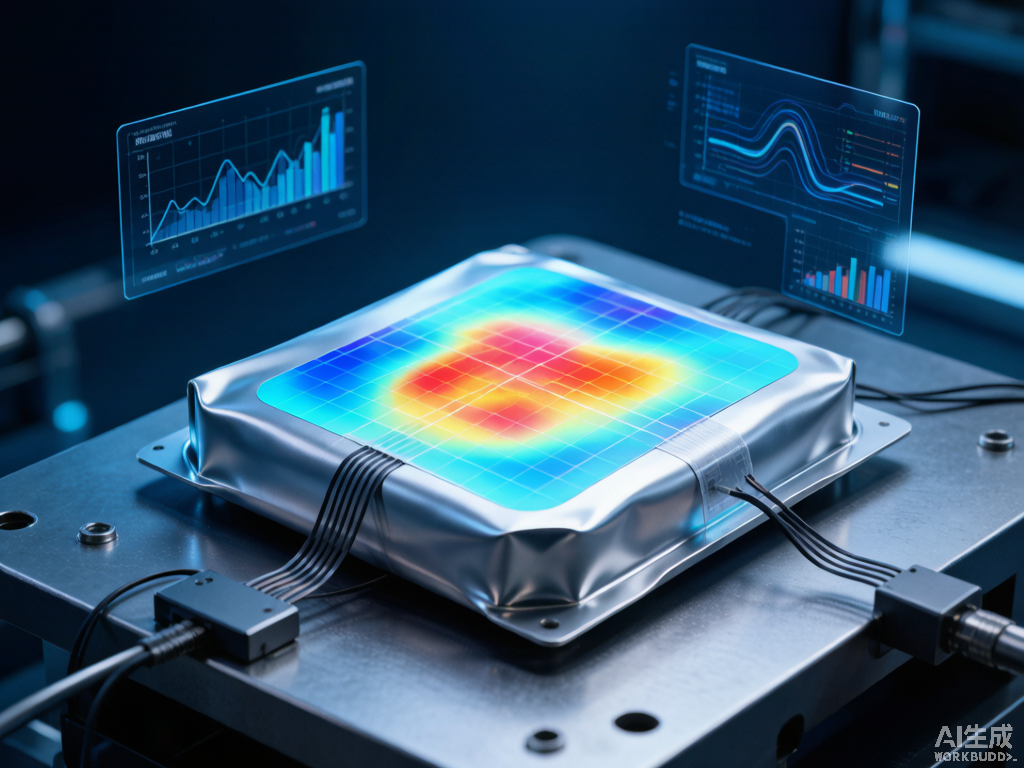
100+pts
Single cell measurement points
0.5kPa
Resolution
200Hz
Sampling frequency
5000+cycles
Cycle durability
Battery Cell Surface Expansion Force Monitoring In-situ capture of surface pressure distribution evolution during charge-discharge cycles
02

Internal Battery Expansion Force Distribution Monitoring System

INTERNAL CELL SWELLING FORCE MONITORING

Testing Requirements

Internal abnormalities such as gas generation, phase change, lithium dendrites, and uneven electrolyte wetting all need to be reflected through internal pressure changes. Internal gas generation in battery cells is the cumulative result of multiple side reactions including SEI film growth, electrolyte oxidation decomposition, and anode lithium plating, and is a key indicator of battery "State of Health (SOH)" and "State of Safety (SOS)". Traditional battery cells have closed structures, making internal pressure difficult to capture.

Application Scenarios: Battery cell R&D testing, battery cell failure analysis, battery cell reliability verification, safety assessment institutions, power battery thermal diffusion testing, solid-state battery research

Yangyan Solution

Integrate micro flexible pressure sensor arrays between battery cell electrode groups, between positive and negative electrodes and separators, or in reserved spaces at the top of electrode groups to perform in-situ monitoring of internal pressure distribution in battery cells, capturing the spatiotemporal evolution process of gas expansion.

  • Internal gas generation monitoring: Real-time recording of internal pressure curves throughout the formation, cycling, and storage cycle
  • Short circuit warning: Micro short circuit precursors are usually accompanied by rapid local pressure increases
  • Phase change pressure: Monitor pressure fluctuations caused by phase changes in high-nickel/silicon-carbon systems
  • Electrolyte wetting tracking: Observe electrolyte wetting uniformity during the formation process
  • In-situ research: Simultaneously obtain coupled data of electrochemical curves (voltage/current) + pressure distribution

Solution Value

Provides decisive evidence for battery cell failure analysis; provides direct data for pressure management of new material systems (solid-state/semi-solid/lithium-sulfur/sodium-ion); provides earlier failure signals for thermal diffusion testing warning systems.

50+pts
Built-in measurement points
4MPa
Range
85°C
Temperature resistance
99%+
Data integrity rate
Internal Battery Expansion Force Monitoring In-situ built-in sensor array, the "visible" health manager for battery cells
03

Battery Formation Equipment Pre-tightening Force Loading and Pressure Distribution Testing

FORMATION & PRE-TIGHTENING FORCE TESTING

Testing Requirements

Formation is the key process of first charging to form the SEI film, and applying reasonable pre-tightening force to the electrode group is the core element to ensure uniform SEI film, sufficient electrolyte wetting, suppression of gas generation, and improvement of cycle consistency. Insufficient pre-tightening force leads to poor contact/lithium plating, while excessive force leads to electrode deformation and edge curling; traditional presses apply "target pressure" but the actual distribution uniformity is unknown.

Application Scenarios: Battery cell formation equipment manufacturers, battery formation and capacity grading equipment, battery PACK assembly lines, energy storage battery pre-tightening force testing, new process verification

Yangyan Solution

Integrate flexible pressure sensor arrays and monitoring systems into formation fixtures, pressure plates, and tooling fixtures to provide real-time feedback on the actual pressure distribution data applied to the battery surface, helping with process optimization and equipment calibration.

  • Pre-tightening force uniformity verification: Detect whether the pressure distribution across the entire electrode group surface is uniform
  • Formation pressure curve tracking: Real-time display of pressure changes with voltage/SOC during the formation process
  • Fixture deviation analysis: Feedback on equipment assembly deviations for convenient fixture correction
  • Process optimization closed-loop: Provide data basis for collaborative optimization of formation process (current/temperature/pressure)
  • Equipment factory calibration: Provide factory pressure calibration data support for formation equipment manufacturers

Solution Value

Improve formation qualification rate by 5-15%, reduce cycle diving problems caused by uneven SEI film; provide formation equipment manufacturers with a "pressure consistency quantification" differentiation selling point; help battery manufacturers establish a process database from fixtures to battery cells.
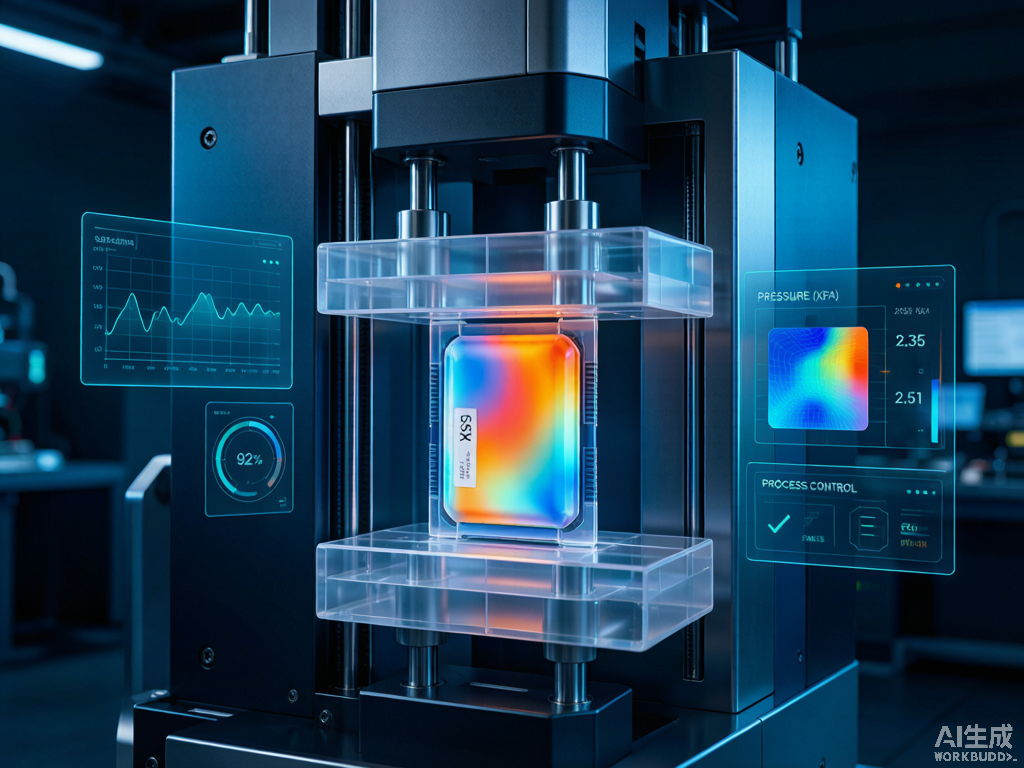
256+pts
Formation plate measurement points
±3%FS
Control accuracy
80°C
Formation temperature conditions
100Hz
Real-time acquisition
Formation Equipment Pre-tightening Force Testing Real-time feedback on formation pressure distribution, making the process "visible and controllable"
04

Power Battery Thermal Runaway Early Warning Monitoring System

THERMAL RUNAWAY EARLY-WARNING SYSTEM

Testing Requirements

Power battery thermal runaway is the biggest threat to electric vehicle safety. From internal short circuit occurrence to thermal runaway propagation takes only minutes to tens of minutes, but current mainstream warning methods (temperature, voltage, smoke) are mostly "mid-to-late thermal runaway" signals, with warning times of only 30 seconds to 3 minutes. Research shows that battery cells experience abnormal expansion force increases 10-30 minutes before thermal runaway, but existing BMS systems lack pressure sensing capabilities.

Application Scenarios: Power battery PACK integration, BMS battery management system, energy storage containers, battery retirement warning, battery leasing operations, smart battery cloud platforms

Yangyan Solution

Deploy flexible pressure sensor arrays at key positions such as between battery cells in the pack, module end plates, and cooling plate edges, integrated with temperature sensors to form a "pressure + temperature + voltage" three-dimensional warning signal, advancing the thermal runaway warning window to the minute level.
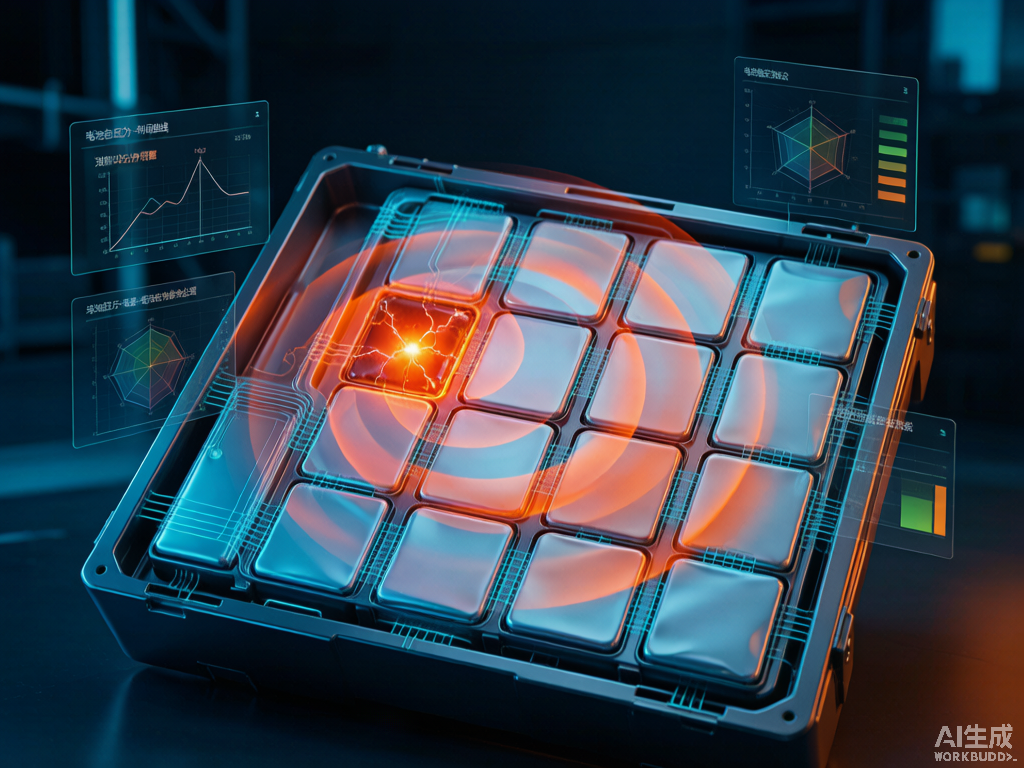
  • Early anomaly detection: Identify internal short circuit, gas generation, and other thermal runaway precursor signals
  • Propagation warning: Cross-cell pressure mutation to identify thermal diffusion paths
  • Fast charging safety: Monitor stress changes during fast charging to identify lithium plating risks
  • SOH state assessment: Output "safety level" assessment for operating battery packs
  • BMS linkage: Provide millisecond-level pressure signals to BMS to trigger active power reduction/cutoff

Three-stage Warning Time Window

Thermal Runaway Evolution Process and Yangyan Solution Warning Timeline
Stage 1
-30 ~ -10 min
Early internal short circuit: Abnormal pressure increase (5-15% increase), Yangyan pressure sensor can immediately identify, recommend power reduction operation
Stage 2
-10 ~ -2 min
Gas generation period: Rapid cell expansion, synchronous pressure increase in adjacent cells, cross-cell pressure abnormality → trigger emergency alarm
Stage 3
-2 ~ 0 min
Eve of thermal runaway: Sudden pressure change, rapid temperature rise, linked BMS cutoff, trigger cooling, notify passenger evacuation
Comparison
Traditional temperature
Temperature response lags 5-15 minutes, can only alarm in stages 2-3, lacks early window
30+min
Early warning lead time
128+pts
Module measurement points
1kHz
Signal sampling
CAN/UDS
BMS interface
Power Battery Thermal Runaway Early Warning Identify internal short circuit precursors 30 minutes in advance, giving safety a "head start"

Why Choose Yangyan Technology Battery Safety Monitoring Solution

⚡

Millisecond Response Speed

Collaborative optimization of flexible piezoelectric film and sampling circuit, 1kHz high-frequency sampling, making battery anomalies "nowhere to hide", meeting the real-time requirements of thermal runaway early warning

🔬

Electrochemical Environment Tolerance

Special packaging process withstands electrolyte immersion, acid-base corrosion, -40 ~ 85°C temperature cycling, meeting the harsh conditions of long-term internal/external battery monitoring

📈

Electrochemical Mechanism Coupling Analysis

Synchronous acquisition of voltage/current/temperature/pressure multi-dimensional data, establishing "pressure-electrochemistry" coupling model, deepening battery research dimensions

🛡️

Automotive-grade Reliability

Products have passed rigorous environmental testing (vibration, shock, high and low temperature, EMC), can be equipped with automotive-grade BMS systems, deployed in mass-produced battery packs

🔌

Standardized Interface and Integration

Supports CAN, UDS, SPI, RS485 and other standard interfaces for seamless integration with BMS/host computer; provides complete SDK and reference design documentation

🏆

Leading Customer Validation

Has been implemented in multiple leading customer scenarios including power battery companies, energy storage integrators, and battery research institutions, accumulating rich engineering practical experience

OUR CUSTOMERS

服务客户类型
🔋
Power Battery Companies
⚡
Energy Storage Integrators
🏭
Formation Equipment Manufacturers
🛠️
PACK Assembly Lines
🧪
Battery Cell R&D Laboratory
🔍
Battery Failure Analysis
🛡️
Battery BMS Manufacturers
🚗
New Energy Vehicle Manufacturers
📡
Battery Cloud Platform
📋
National Testing Institutions
🎓
University Battery Research Institutes
💼
Battery Leasing Operations